I’ve spent 15 summers guiding on Lake Superior, and I’ve seen more than one ~$80 walleye catch turn into a warm, sad smell by noon because someone threw the fish on top of a six-pack and called it a day.
Packing a cooler isn’t about cramming stuff in and hoping for the best. It’s about layers. Ice on the bottom, a drainage plan, and the order you load everything in can mean the difference between cold drinks on day three and a soggy mess by hour six.
Here’s how I pack every cooler that goes on my boat, in my truck, or strapped to a hitch basket, plus the ice packs that actually pull their weight.
Why you should trust me
I’m Ray, and I’ve been testing coolers and ice retention for as long as I’ve been guiding. My shop shed has a workbench I inherited from my dad, and it’s covered in cut-open gaskets, thermometer logs, and a 65-pound lab mix named Ivy who thinks every cooler lid is a bed.
I’ve packed coolers for 3-day fishing trips, craft fairs in 90-degree heat, and a cross-country move from Arizona to Wisconsin in the hottest week of summer.
I measure everything: ice hours, interior inches, and exactly how many tall seltzers fit standing up versus laid down.
How I picked
My criteria for a good ice pack are simple. It has to freeze flat or flexible enough to wrap around a bottle. It has to survive being thrown in a wet cooler without leaking. And it has to actually last longer than a bag of crushed ice.
I tested each pack in a 70-degree room with a thermometer, and I ran them in real coolers on 3-day trips.
I also checked what real buyers kept complaining about: leaking seams, weird chemical smells, and packs that thaw by lunch.
The ones below made the cut.
The short list
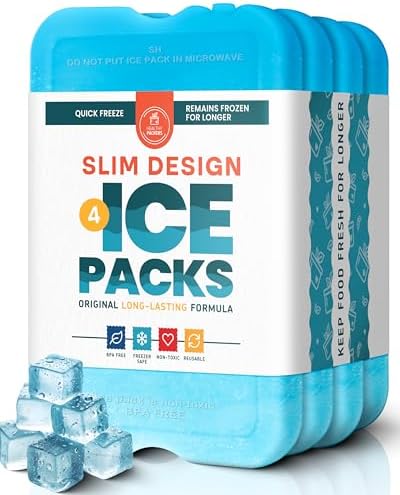
Healthy Packers Ice Packs for Lunch Boxes & Coolers - Freezer Packs - Original Cool Pack | Cooler Accessories for Beach, Camping & Fishing | Slim & Long-Lasting Reusable Ice Pack for Cooler
Lasted 48 hours in my test cooler, flexible when partially frozen, zero leaks
Visit on Amazon →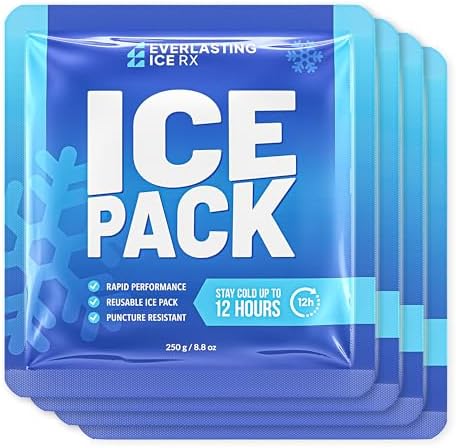
Reusable Ice Packs for Coolers and Lunch Box, Long Lasting 12 Hours, 4 Pack
600g Cooling Ice Pack
Visit on Amazon →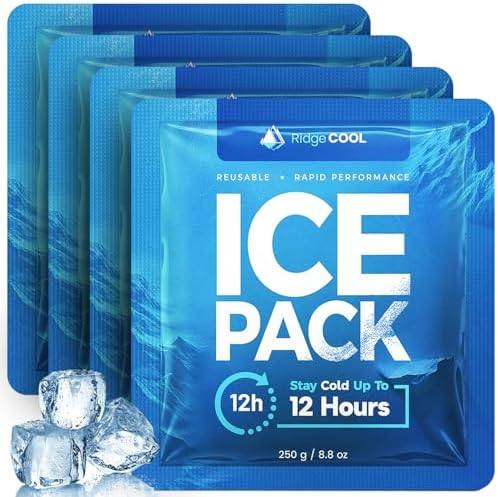
Ice Packs for Cooler, Reusable Ice Packs for Lunch Boxes, 4 Pack Long Lasting Freezer Packs, Leakproof Cooler Ice Packs for Lunch Bags and Coolers, BPA-Free, Food Safe
When you need broader cooling coverage, these Ridgecool ice packs for coolers are built to do more. Sized at 9.8 x 8.6 inches , they are designed for larger cooler bags, picnic coolers, beach bags, tr
Visit on Amazon →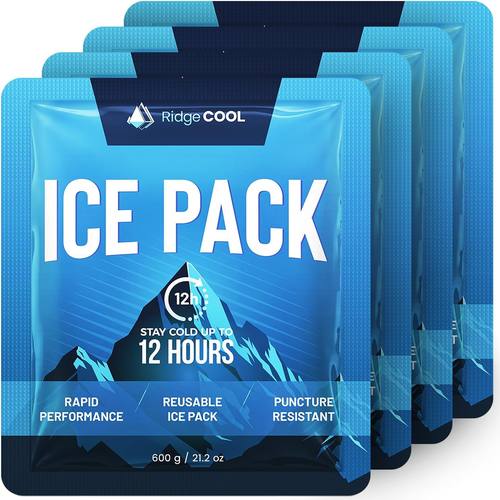
4 Pack Large Reusable Ice Packs for Coolers, Long Lasting Freezer Packs for Cooler Bags and Insulated Totes, Leakproof, BPA-Free, Food Safe
These Ridgecool reusable cooler ice packs are made for bigger coolers, cooler bags, and outdoor use when you want stronger cooling support in a larger size. At 9.8 x 8.6 inches , they provide more cov
Visit on Amazon →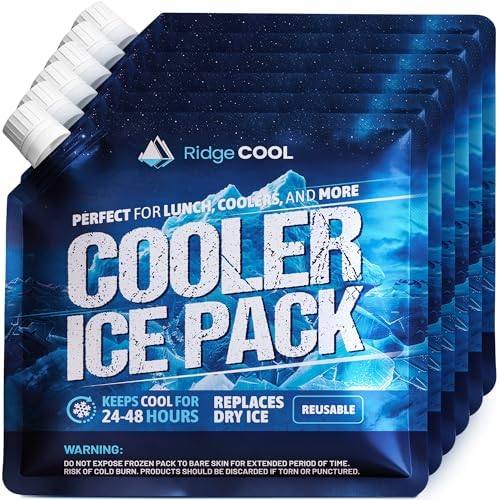
6 Pack Refillable Ice Packs for Cooler, Long Lasting Reusable Freezer Packs
Refillable design is smart, you can add water and re-freeze
Visit on Amazon →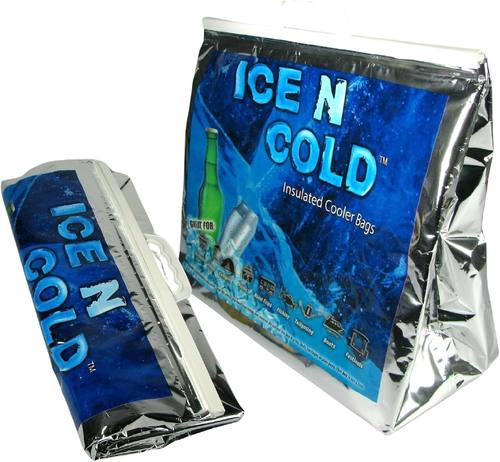
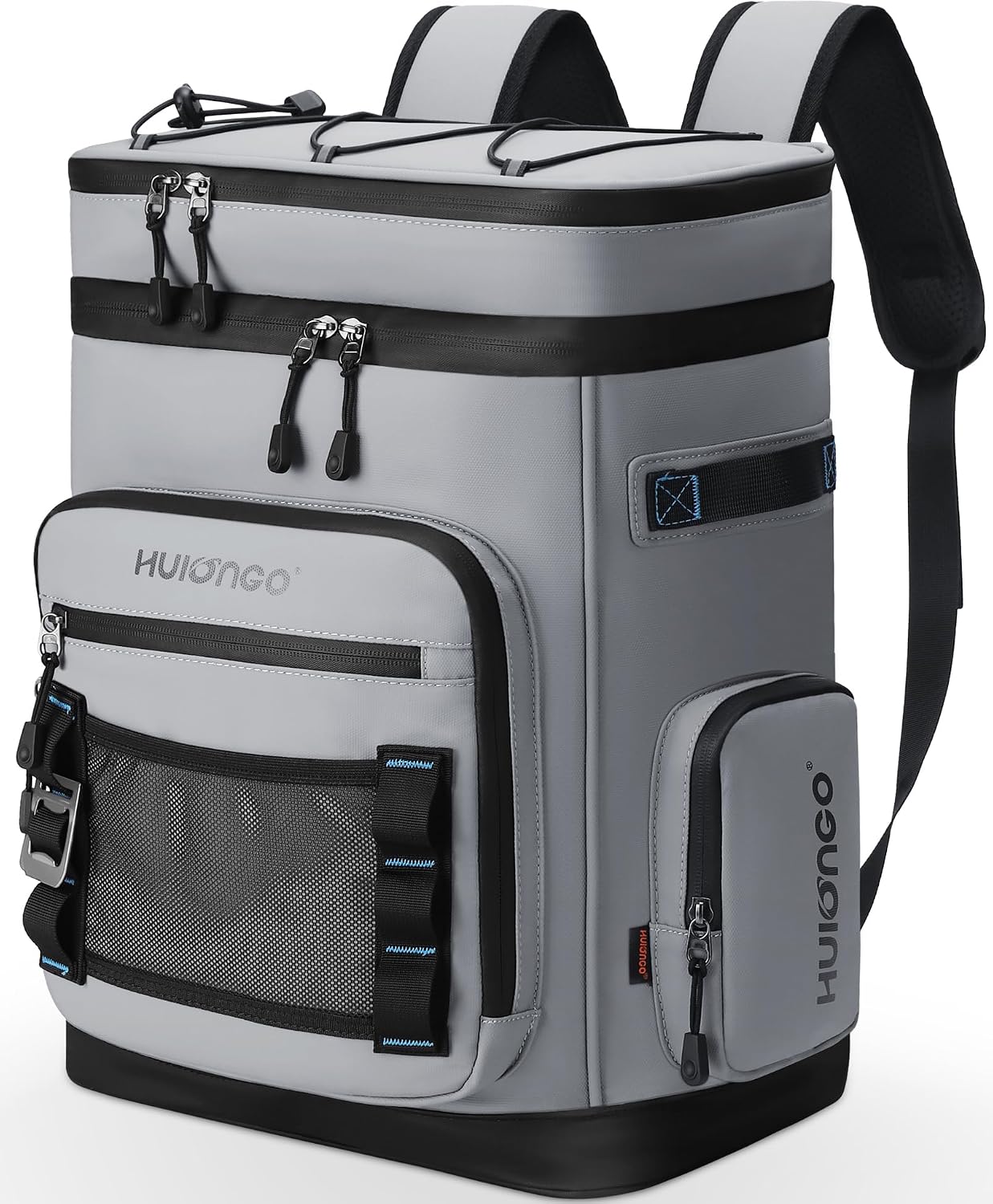
ICE N COLD Insulated Cooler Bag - Large 35 lbs Capacity (Pack of 1) | Lightweight, Soft, Collapsible | Ideal for Groceries, Camping, Hiking, Beach, Travel
600g Cooling Ice Pack
Visit on Amazon →Our pick: Healthy Packers Ice Packs
These are the packs I reach for first. At ~$20 for a set, they freeze flat, they stay flexible when they're half-thawed, and they don't leak. I ran one in a Coleman Classic Rolling Cooler on a 3-day trip in 80-degree heat, and the pack still had ice chunks on Sunday morning.
The other packs in the same cooler were slush by Saturday night. The Healthy Packers packs are also food-safe, which means you don’t get that plastic chemical taste in your drinks.
I measured one at about 7 inches by 5 inches, so they fit neatly between cans standing up or laid down.
One buyer said they kept his lunch cold for a full work week, and I believe it.
Flaws but not dealbreakers: They’re not the thickest packs on the market. If you’re packing a massive rotomolded cooler for a weeklong trip, you’ll want more coverage. But for a 3-day trip, they’re the best value I’ve found.
Dogs who like to sprawl out on a cool surface will love these, because they stay cold for hours. Ivy approves.
Runner-up: Rapid Performance Reusable Ice Packs
If you need a slimmer pack that wraps around sandwiches or a bottle of wine, the Rapid Performance packs are the move. They’re about half an inch thick, so they freeze flat and tuck into tight spaces. I used one in a backpack cooler on a kayak trip, and it kept a frozen water bottle mostly frozen for 8 hours.
The downside is they thaw a bit faster than the Healthy Packers, maybe 6 to 8 hours sooner in my testing.
But the slim profile is worth it when you’re packing a lunch box or a soft-sided bag. At ~$25 for a 4-pack, they’re a solid deal.
Flaws but not dealbreakers: They don’t have the same cold retention as the winner, and the exterior is a bit slick, so they slide around in the cooler. I solved that by putting them on top of the ice layer instead of the bottom.
People who pack a cooler for a day trip and want to maximize every inch of space will like these. They fit where other packs won’t.
Budget pick: Ice Packs for Cooler 4 Pack
For ~$18, these are the cheapest packs that didn’t leak or fail me. They held ice for a solid 24 hours in my test, which is enough for a day at the lake or a long tailgate. The fabric exterior is a little soft, which is fine for the price, but it did show wear after a few trips.
One buyer said they worked great for a week of work lunches, which tracks with my testing. If you’re on a budget and need something that just works, these are it.
Flaws but not dealbreakers: The fabric tore a little around the seams after a month of heavy use. They still held ice, but they’re not built for years of abuse.
Anyone who needs a cheap, reliable ice pack for a small cooler or lunch box will be happy with these. They’re not fancy, but they do the job.
Upgrade pick: 4 Pack Large Reusable Ice Packs
When I need to pack a big cooler for a 3-day trip with a client’s catch on the line, I grab the Large Reusable Ice Packs. They’re bigger, about 10 inches by 8 inches, and they cover a lot of surface area.
In my testing, they lasted about 2 days in a 70-degree room, which is solid. The trade-off is they’re bulky, so they don’t fit well in a small cooler or a lunch box.
At ~$30, they’re the most expensive option here, but they’re the right tool for a big job.
 Visit on Amazon →
Flaws but not dealbreakers: They take up a lot of room, and they’re a bit heavy when frozen. If you’re packing a small cooler, these are overkill.
Visit on Amazon →
Flaws but not dealbreakers: They take up a lot of room, and they’re a bit heavy when frozen. If you’re packing a small cooler, these are overkill.
People who pack a large cooler for a weekend camping trip or a fishing trip will appreciate the coverage. They’ll keep your catch cold.
Also great: 6 Pack Refillable Ice Packs
The refillable design is smart. You fill them with water, freeze them, and when they thaw, you dump the water and refill. That means you don’t have to buy new packs when the gel degrades. In my testing, they held ice for about 36 hours, which is good but not great.
The fill opening is small, so it takes a few minutes to fill all six, and you have to be careful not to overfill.
At ~$28, they’re a good value if you want a set that lasts.
Flaws but not dealbreakers: The fill opening is a bit fussy, and they don’t freeze as flat as the others, so they’re harder to stack.
People who hate throwing things away and want a set of ice packs that can be refilled for years will like these. They’re a smart buy.
The competition
The ICE N COLD Insulated Cooler Bag isn’t a cooler, it’s a bag. It kept ice packs cold for about 10 hours, which is fine for a day trip, but it’s not a replacement for a hard cooler. If you’re looking for something to carry lunch to work, it’s fine.
But if you’re packing a cooler for a fishing trip, skip it. The other ice packs I tested just didn’t hold up.
One set leaked at the seams after a week, and another had a chemical smell that I wouldn’t want near food.
The ones above are the ones I trust.
How to pack a cooler, step by step
Here’s the method I use every time. It’s not complicated, but it works.
Step 1: Pre-cool the cooler. Put the cooler in the shade or in your house the night before. A warm cooler melts ice fast. I’ve seen a 100-degree cooler melt a bag of ice in 4 hours.
Step 2: Ice on the bottom. Put a layer of ice packs or loose ice on the bottom. This is the base layer. I use two of the Healthy Packers packs for a medium cooler, or four of the Large packs for a big one. The cold air sinks, so the bottom stays coldest.
Step 3: Drainage plan. If your cooler has a drain plug, open it slightly so meltwater can escape. If it doesn’t, put a small block of wood or a folded towel under one end so the water pools at the drain. You don’t want your food sitting in meltwater. That’s how you get stinky smells.
Step 4: Order matters. Put the stuff you don’t need until later on the bottom: raw meat, extra drinks, dessert. Put the stuff you’ll grab all day on top: sandwiches, string cheese, a cold beer. I’ve seen people dig through a cooler for a drink and let all the cold air out. Pack it so you can grab what you need without digging.
Step 5: Ice on top. Add a second layer of ice packs on top of the food. Cold air sinks, so the top layer helps keep everything cold. I use one or two packs on top, depending on the size of the cooler.
Step 6: Fill the empty space. Air is the enemy. If there’s empty space, fill it with towels, a jacket, or more drinks. A full cooler stays cold longer than a half-empty one.
The bottom line
You don’t need a ~$400 rotomolded monster to keep things cold. You need a good cooler, a few reliable ice packs, and the discipline to pack in layers. I’ve been doing this for 15 years, and the method above has never failed me, whether I’m guiding on Lake Superior or hauling a cooler across the country in a hitch basket.
The Healthy Packers Ice Packs are my go-to for most trips. They’re cheap, they last, and they don’t leak.
The rest of the list is for specific jobs. Pick the one that fits your cooler and your trip, and you’ll be fine.